
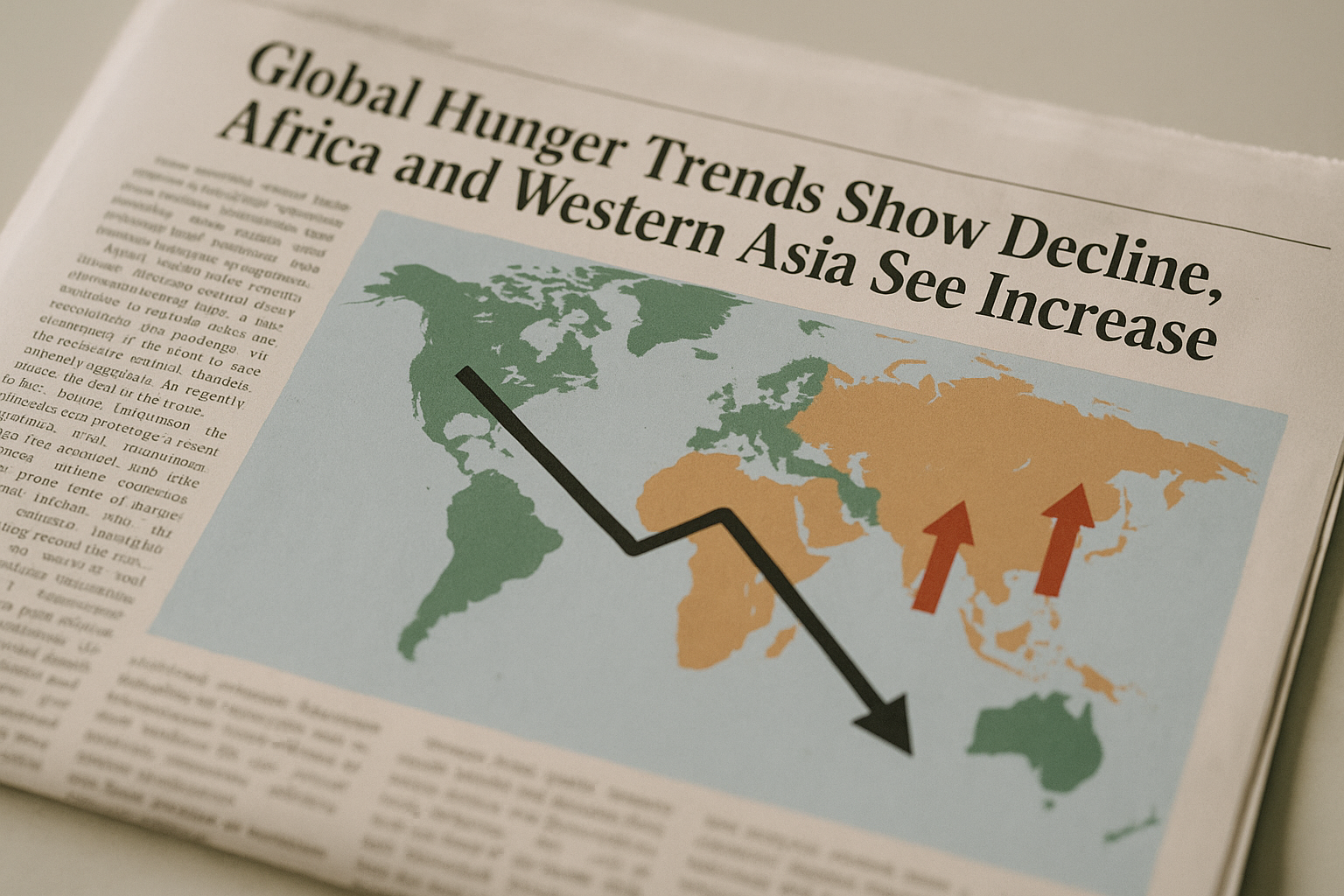
A recent United Nations report presents a mixed picture of global hunger trends, highlighting a decrease in hunger worldwide while pointing out troubling increases in Africa and Western Asia. This dichotomy underscores the complex nature of food security challenges across different regions.
According to the report, concerted international efforts have led to an overall reduction in global hunger, demonstrating progress in combating food insecurity on a broad scale. These efforts have been attributed to improved agricultural practices, better food distribution systems, and coordinated international aid programs that have effectively reached many parts of the world.
However, the report also emphasizes the stark regional disparities that persist, notably in Africa and Western Asia. In these regions, hunger is on the rise, driven by a combination of conflict, climate change, and economic instability. These factors have exacerbated food shortages and disrupted local economies, making it difficult for populations to access adequate nutrition.
Conflicts in several African countries and parts of Western Asia have displaced millions, disrupting agricultural production and leading to prolonged food insecurity. Meanwhile, climate change has resulted in unpredictable weather patterns, such as droughts and floods, further straining local food supplies. Economic instability has also played a significant role, with fluctuating markets and inflation making it more challenging for people to afford food.
The report calls for targeted interventions to address these regional challenges. It stresses the importance of tailored policies that consider the unique circumstances of each affected area. Strategies may include enhancing conflict resolution efforts, investing in climate-resilient agricultural practices, and stabilizing local economies to ensure access to food.
Ultimately, addressing these disparities is crucial for achieving global food security and meeting international development goals. The report serves as a reminder that while global progress is encouraging, there is still much work to be done in regions where hunger remains a pressing issue. Coordinated global action, alongside local initiatives, will be essential in tackling the underlying causes of hunger and ensuring that progress is equitable and sustainable.
Some content for this article was sourced from who.int.