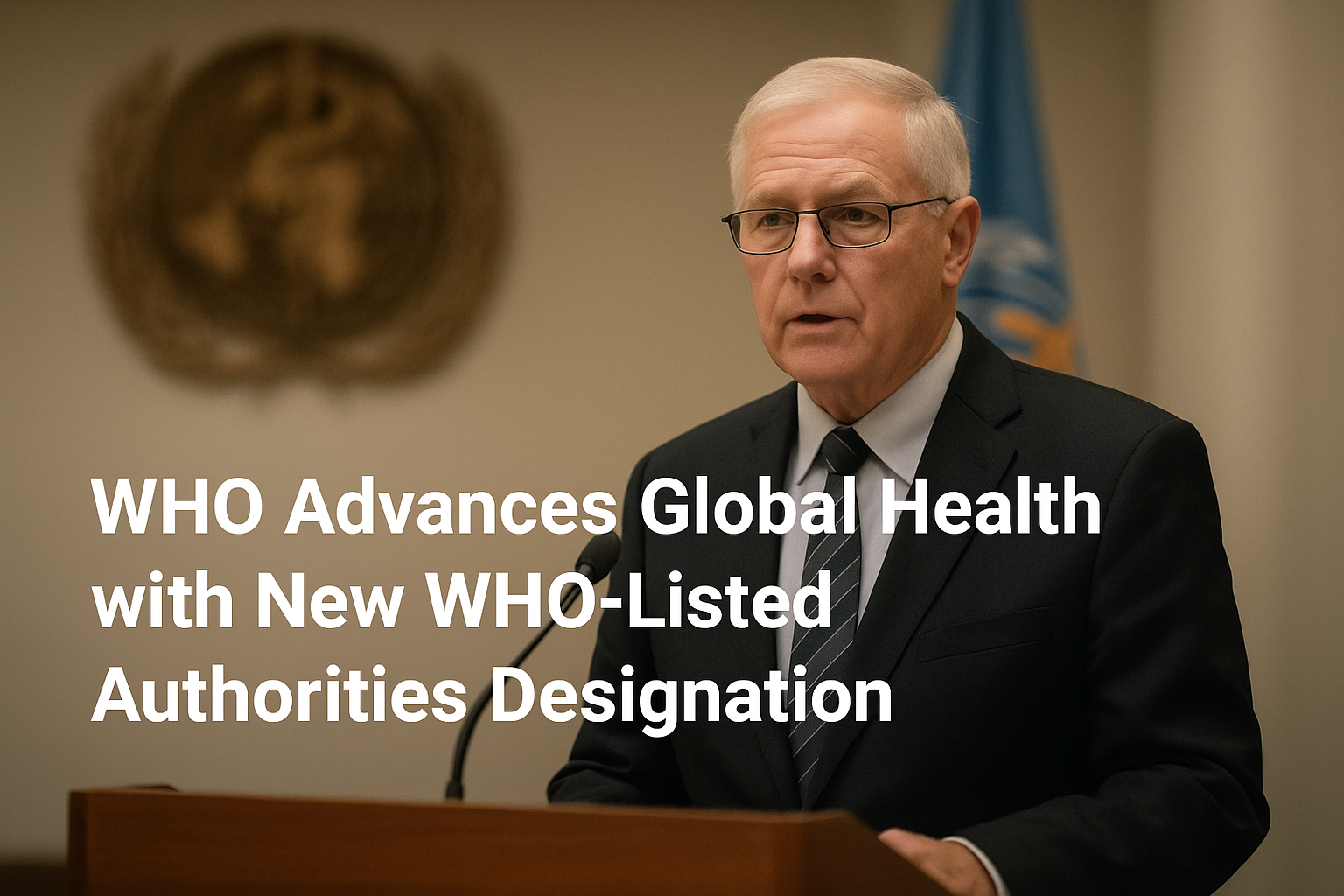
The World Health Organization (WHO) has announced the designation of new WHO-Listed Authorities (WLAs) in a strategic effort to enhance global access to quality-assured medical products. This initiative is a key part of WHO’s ongoing mission to ensure that medical products worldwide meet international safety, efficacy, and quality standards.
By expanding the list of WLAs, WHO aims to strengthen the regulatory capacity of countries, facilitating the availability of essential medical products on a global scale. The move is particularly significant for nations with limited regulatory resources, where ensuring the quality and safety of medical products remains a formidable challenge. These new designations are expected to bridge existing gaps in health systems, promoting more equitable access to vital health products.
The introduction of additional WLAs marks a crucial advancement in addressing the uneven distribution of quality-assured medical products, which has long been a critical issue in global health. Many countries, especially those facing resource constraints, struggle to maintain stringent regulatory standards. The WHO’s initiative is poised to alleviate these challenges, contributing to improved health outcomes through strengthened regulatory frameworks.
This development underscores WHO’s commitment to fostering international collaboration and enhancing global health systems. By recognizing more authorities, the organization not only supports individual countries in their regulatory efforts but also promotes a unified approach to tackling global health challenges.
As the WHO continues to expand its list of recognized authorities, the global health landscape is likely to witness significant improvements. These efforts are anticipated to lead to better health outcomes and more reliable access to necessary medical products for populations worldwide. The WHO’s initiative highlights the importance of international cooperation in achieving sustainable health advancements and addressing pressing global health issues.
Some content for this article was sourced from who.int.