
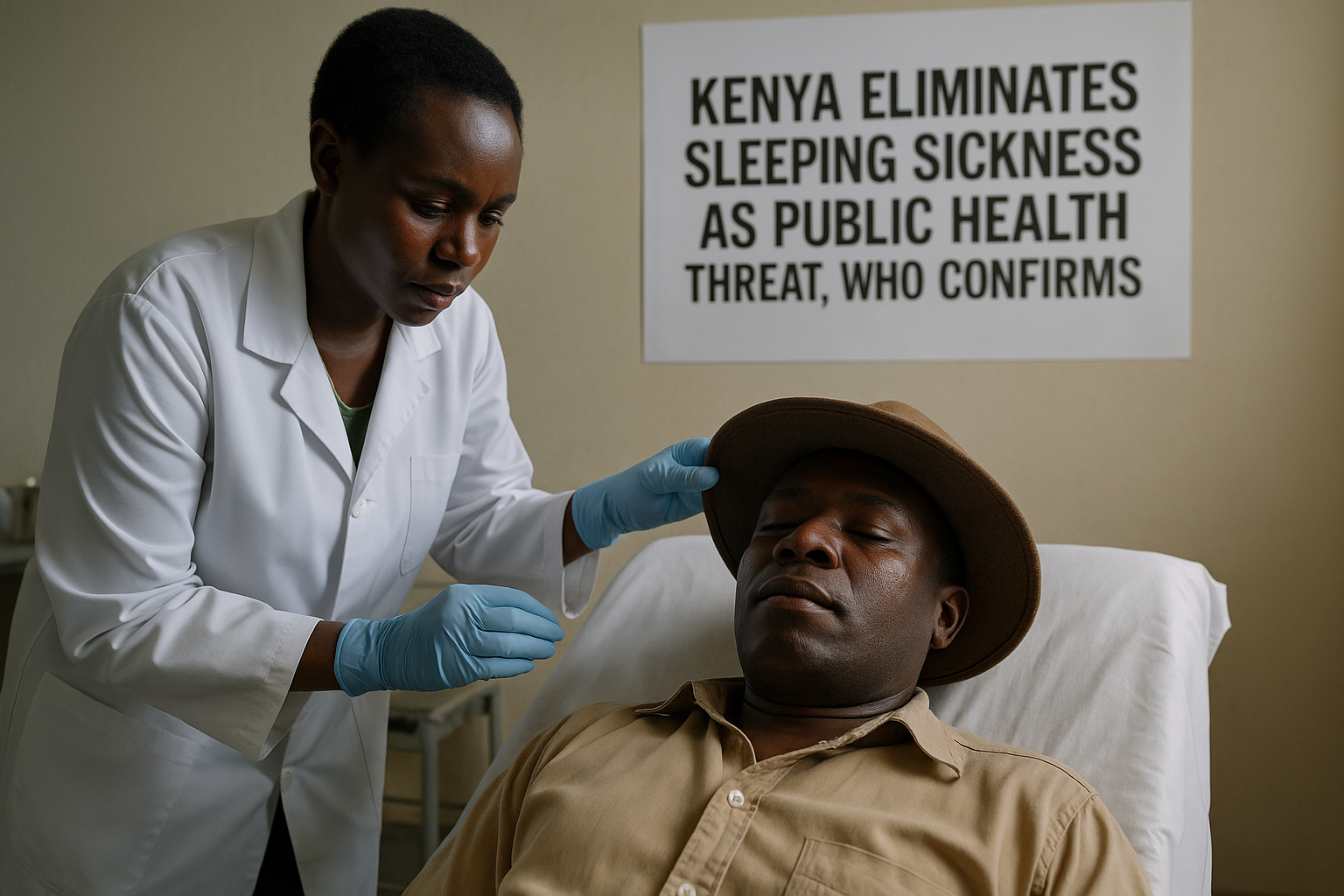
The World Health Organization (WHO) has officially recognized Kenya for eliminating human African trypanosomiasis (HAT), commonly known as sleeping sickness, as a public health problem. This achievement places Kenya as the tenth nation to reach this significant milestone, marking substantial progress in the fight against neglected tropical diseases (NTDs). The eradication of HAT follows Kenya’s previous success in eliminating Guinea worm disease in 2018, illustrating the country’s consistent efforts in enhancing public health.
Sleeping sickness is a severe illness caused by the Trypanosoma brucei parasite, transmitted to humans through the bites of infected tsetse flies. It poses a significant risk to rural populations involved in agriculture, fishing, and hunting, with the rhodesiense form of the disease being prevalent in Kenya. This form progresses rapidly and can be fatal within weeks without appropriate treatment. The WHO’s validation of Kenya’s achievement underscores the importance of effective health interventions and the country’s commitment to improving health standards.
Dr. Tedros Adhanom Ghebreyesus, WHO Director-General, praised Kenya’s accomplishment, noting that it reflects broader efforts across Africa to combat neglected tropical diseases. “Kenya joins the growing ranks of countries freeing their populations of human African trypanosomiasis,” he stated, highlighting the significance of this achievement for both Kenya and global health initiatives. The successful elimination of HAT in Kenya contributes to worldwide efforts to reduce the burden of NTDs, demonstrating the effectiveness of sustained health initiatives in eradicating life-threatening diseases.
Some content for this article was sourced from who.int.