
HTML body:
A recent report by the United Nations highlights a mixed global picture of food security. While the overall number of people experiencing hunger worldwide has decreased, certain regions continue to face significant challenges. According to The State of Food Security and Nutrition in the World (SOFI 2025) report, approximately 673 million people, or 8.2 percent of the global population, experienced hunger in 2024. This marks a decrease from previous years, with 8.5 percent in 2023 and 8.7 percent in 2022.
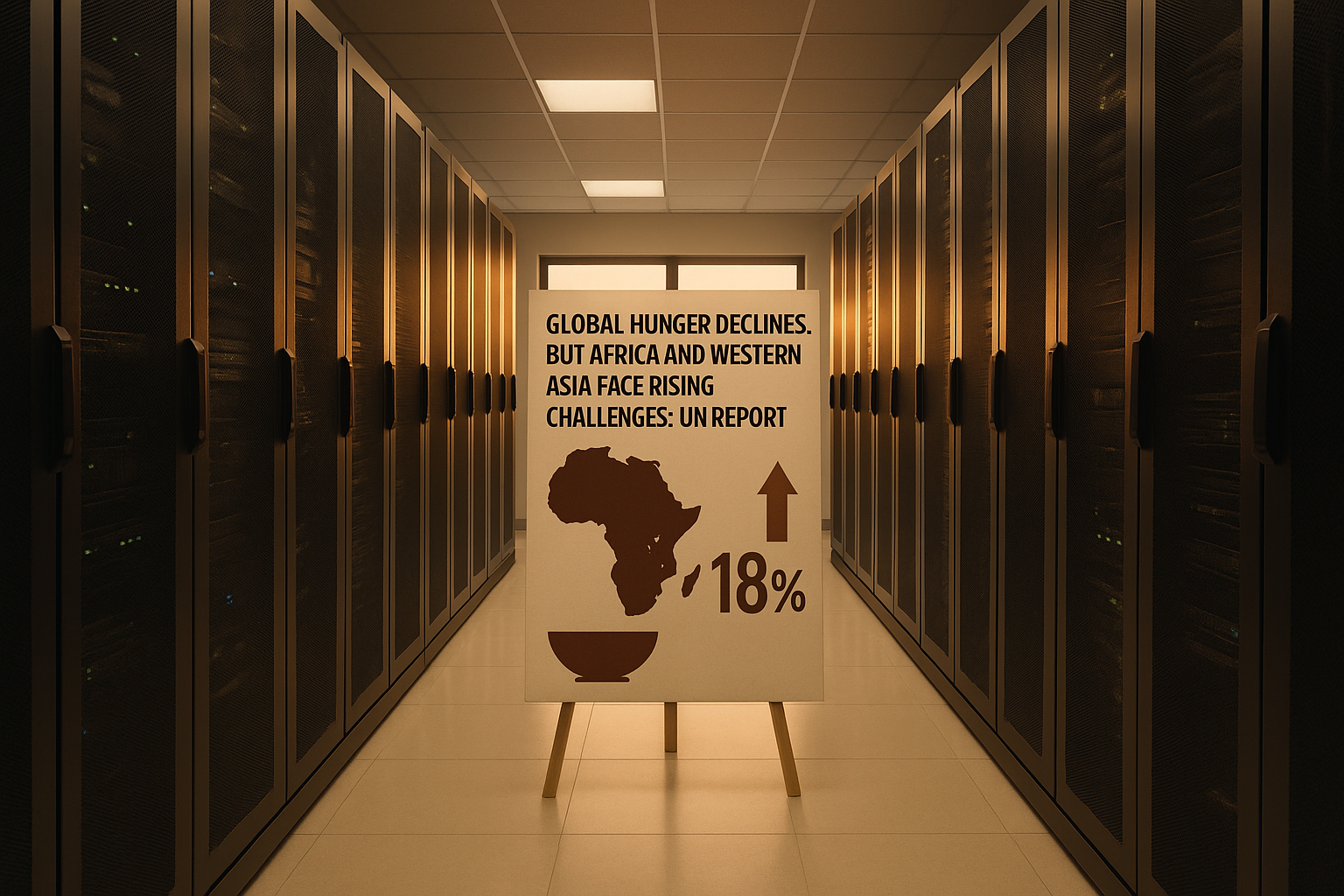
Despite the global decline, the report reveals a concerning rise in hunger across Africa and western Asia. In Africa, more than 20 percent of the population faced food insecurity in 2024, affecting approximately 307 million individuals. Similarly, western Asia has seen persistent increases in hunger levels, exacerbated by factors such as economic instability, conflicts, and climate change impacts.
On the other hand, notable improvements have been observed in southern Asia and Latin America. The prevalence of undernourishment in Asia dropped from 7.9 percent in 2022 to 6.7 percent in 2024, translating to about 323 million people. Latin America and the Caribbean also showed progress, with undernourishment falling to 5.1 percent in 2024 from a peak of 6.1 percent in 2020.
The report, launched at the UN Food Systems Summit Stocktake in Addis Ababa, underscores the uneven progress in addressing global hunger. It emphasizes the need for targeted interventions to tackle the local factors contributing to food insecurity in regions like Africa and western Asia. Additionally, high food inflation and other economic pressures have slowed recovery efforts post-pandemic, suggesting that sustained efforts are required to ensure food security for all.
Some content for this article was sourced from who.int.